
2026 Home Design Guide for Northwest Arkansas
Design conversations are changing.
Homeowners still want homes that feel current, but mid- to high-end clients are also thinking more carefully about what will hold up visually and functionally over time.
That tension between what is popular now and what will still feel right years from now is where the best design decisions tend to happen.
Interior & Exterior Selections
This guide looks at key interior and exterior selections we expect to matter in 2026, including cabinetry, siding, flooring, paint colors, roofing, drywall finish, outdoor living, countertops, and several other categories that shape the overall feel of a home.
The Goal
The goal is not to declare one "right" answer for every project. It is to help homeowners understand the tradeoffs, design direction, and long-term implications behind the choices.
Stain-Grade vs. Paint-Grade Cabinets

One of the most important design decisions in kitchens, bathrooms, and built-ins is whether cabinetry should be stain-grade or paint-grade. In 2026, both remain relevant, but they communicate different things visually.
Paint Grade Cabinetry
Paint-grade cabinetry continues to be popular because it supports cleaner color control and works well in modern traditional and transitional interiors. Soft whites, warm off-whites, mushroom tones, muted taupes, and desaturated greens are all being used to create a more layered look than the bright white kitchens that dominated earlier cycles.
Stain Grade Cabinetry
Stain-grade cabinetry is gaining even more traction in higher-end projects because it introduces warmth, depth, and natural variation. White oak and other lighter wood tones are especially popular where homeowners want a home to feel refined but not sterile. In many homes, stain-grade is being used selectively, such as on islands, vanities, range walls, or built-ins, while perimeter cabinetry remains painted.

Thinking Long-Term
From a long-term standpoint, stain-grade cabinetry often ages very well because natural wood tends to stay visually grounded even as color trends shift. Paint-grade cabinetry offers more flexibility in color direction, but the exact shade can sometimes date a project more quickly if it follows a narrow trend too closely. The strongest projects are usually choosing between them based on the architectural tone of the home rather than treating one as automatically better than the other.
Cement Board and Board-and-Batten Siding

Board-and-batten continues to be widely used in modern traditional and transitional exteriors, especially when homeowners want a cleaner, more tailored exterior expression. Cement board products remain common because they offer durability, consistency, and compatibility with several architectural styles.
Board-and-Batten in 2026
The bigger question in 2026 is not whether board-and-batten is still usable. It is how heavily it should dominate the exterior. On some homes, full board-and-batten elevations can feel crisp and current. On others, especially when combined with overly stark color palettes, they can start to feel trend-dependent. Many better exteriors are mixing board-and-batten with lap siding, masonry, timber accents, or more traditional trim hierarchies to keep the house from feeling flat or one-note.
Long-Term Appeal
Long-term appeal often comes from proportion, material transitions, and how the siding works with the massing of the home. Cement board remains a solid material choice, but the design success depends less on the product itself and more on how thoughtfully the elevation is composed.
LVP vs. Engineered Wood vs. Solid Wood Floors

This remains one of the most practical and debated design decisions for homeowners.
Luxury Vinyl Plank (LVP)
Luxury vinyl plank continues to be chosen for durability, moisture resistance, and budget control. It can make sense in some homes and some spaces, particularly where performance and maintenance are major concerns. But in higher-end projects, it is often not the first choice when the goal is a more elevated, long-term finish level.
Engineered Wood
Engineered wood remains one of the strongest middle-ground options because it offers a real wood surface with better dimensional stability than solid wood in many environments. For many mid- to high-end homes, engineered wood is the category that best balances aesthetics, performance, and practicality.
Solid Wood
Solid wood still holds a strong place in premium homes where long-term natural character, refinishing potential, and material authenticity matter most. It remains one of the most timeless flooring selections available, though it may require more environmental control and maintenance awareness.
2026 Flooring Trends
In 2026, the popularity trend continues to move toward warmer, more natural-looking floors with less gray influence and less overt distressing. The long-term winner is usually whichever flooring choice best supports the level of home you are trying to create. In a more elevated project, engineered or solid wood will usually carry the design further than LVP.
Paint Colors Are Warmer, Softer, and More Layered

Cool gray dominance has been fading for some time, and 2026 continues the move toward warmer, quieter palettes. Soft whites, warm neutrals, clay-influenced tones, muted green-grays, and subtle earthy colors are becoming more common across both interiors and exteriors.

That does not mean everything is turning beige. It means homes are generally shifting toward color choices that feel more grounded and less stark. Many homeowners still want contrast, but the contrast is becoming more nuanced.
Instead of harsh black-and-white schemes everywhere, there is more interest in warm white walls, deeper accent cabinetry, aged brass, natural wood, and carefully chosen darker paints used in focused ways.
Long-term, the safest paint strategy is still restraint. The homes that age best usually use trend awareness at the accent level, not as the entire identity of the project.
Combination Metal and Architectural Shingle Roofing
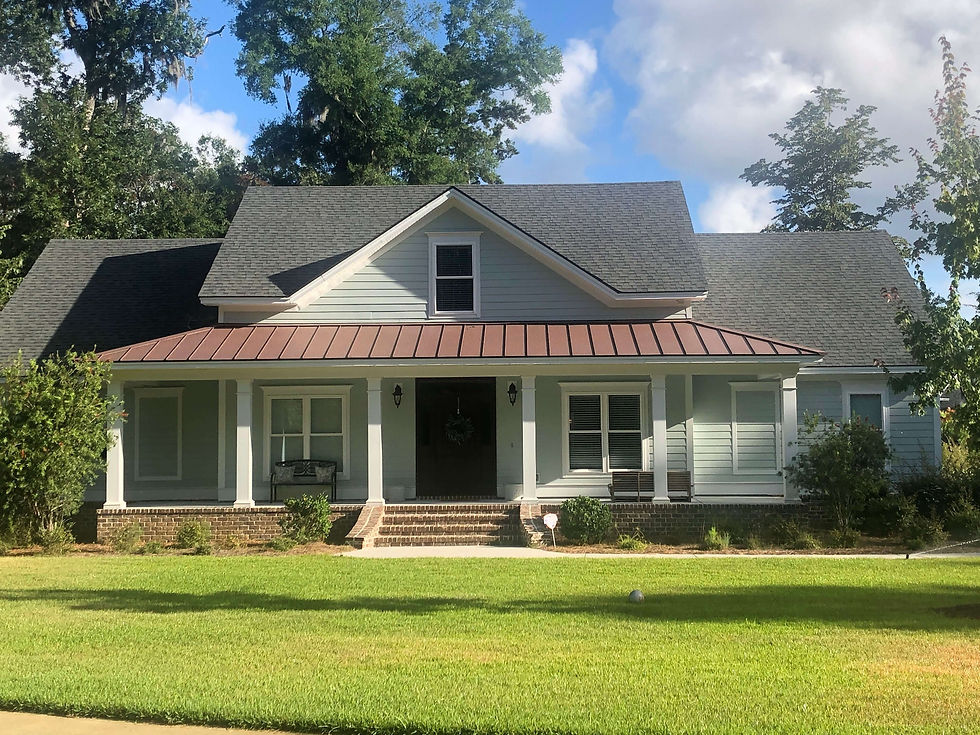
Mixed roofing systems are becoming more common in custom homes and higher-end remodels because they can introduce architectural emphasis without requiring the entire home to be roofed in one premium material. Metal roofing is often used on porches, accent rooflines, covered entries, or secondary masses, while architectural shingles carry the larger field of the roof.

Visually, this can create a more layered and intentional exterior. Functionally, it can also help homeowners direct premium material spending toward the most visible areas of the home.
The key is proportion. If the metal elements are well-placed, the combination can feel timeless and architecturally strong. If they are added without a clear logic, the roof can start to feel busy.
In 2026, mixed roofing is a strong option, but only when the overall exterior composition supports it.
Level 5 Finish Drywall Is Still a Premium Detail

Homeowners do not always think about drywall finish early, but it has a major impact on how polished the final space feels. A Level 5 finish matters most where lighting is strong, wall planes are large and smooth, and the design direction relies on clean surfaces rather than a lot of visual texture.

In modern traditional and transitional luxury homes, that matters more than ever because the cleaner the detailing becomes, the more obvious surface imperfections can be. Level 5 finish is not necessary for every home and every wall, but in higher-end projects it remains a valuable part of achieving a refined result. It is one of those hidden specs that often separates a decent finish from an elevated one.
It is one of those hidden specs that often separates a decent finish from an elevated one.
Outdoor Living Is No Longer an Afterthought

Outdoor living continues to become a bigger part of how homeowners think about the house as a whole. Covered patios, fireplaces, outdoor kitchens, poolside gathering spaces, and stronger indoor-outdoor transitions are not just luxury extras in many homes anymore. They are part of the main lifestyle conversation.
What is changing in 2026 is that homeowners are paying more attention to how outdoor areas relate to the main interior gathering spaces. The best projects do not feel like a patio attached to the house. They feel like an extension of the home’s architecture, materials, and daily use patterns.
From a long-term perspective, outdoor living tends to age well when it is built around comfort, shelter, lighting, and flow rather than novelty.
Solid-Surface Quartz Countertops Remain a Dominant Choice

Quartz continues to hold a very strong position in kitchens and bathrooms because it offers visual consistency, broad design range, and relatively low maintenance. In 2026, the strongest quartz selections tend to be the ones that look more natural and less overly patterned or synthetic.
Homeowners are still gravitating toward solid-surface and lightly veined options that feel calm and architectural. Warm whites, softer creams, and stones with subtle movement tend to support both current popularity and longer-term flexibility.
Natural stone still has an important place in high-end homes, especially where unique movement and character are priorities. But quartz remains one of the most commonly chosen materials because it balances durability, visual range, and day-to-day practicality.
Additional 2026 Design Decisions Worth Watching
Popularity and Longevity Are Not Always the Same Thing
One of the most useful ways to think about design decisions in 2026 is to separate what is currently popular from what is likely to hold up over time. Some choices succeed at both. Others may be getting attention now but are best used in smaller doses.
The strongest homes usually do not chase trends blindly, but they also do not ignore where design is moving.
For most homeowners, the goal is not to build a house that looks trendy for one season. It is to build or remodel a house that feels current now, personal in the long run, and cohesive enough that it still makes sense several years from today.